Review: Lavender Gingham Plaid Jumbo Paperclip Design
As a designer who has spent years digitizing patterns and reviewing machine embroidery design files for client work, I have learned that the difference between a bestseller and a scrap bin reject often comes down to visual clarity and practical application. Recently, I evaluated the Lavender Gingham Plaid Jumbo Paperclip, a digital asset that initially caught my eye for its whimsical yet structured aesthetic. While the product description categorizes it under Crafts and Graphics as a sublimation design, many of us in the embroidery community look at these visual assets with a different lens: how will this translate when stitched out?
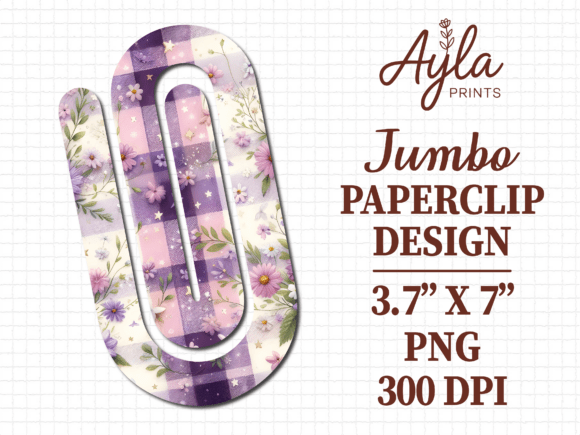
The first impression of the Lavender Gingham Plaid Jumbo Paperclip is one of nostalgic charm mixed with modern minimalism. The lavender hue offers a soft, calming presence, while the gingham plaid pattern introduces a texture that feels both rustic and refined. At approximately 3.7 by 7 inches, the scale is substantial. This is not a tiny accent; it is a statement piece. For an Etsy seller or a small shop product creator, this size is ideal for central placement on tote bags, aprons, or the back of sweatshirts. However, because the source file is provided as a PNG rather than a native embroidery file, the translation from screen to stitch requires careful planning.
Visual Appeal and Project Suitability
When I imagine this design in a real-world scenario, I picture a custom linen tote bag intended for a spring boutique launch. The Lavender Gingham Plaid Jumbo Paperclip would serve as a striking focal point. The juxtaposition of the rigid paperclip shape with the soft, checkered pattern creates a dynamic visual tension that appeals to buyers looking for unique, handmade items. It fits seamlessly into the current trend of "grandmillennial" or cottagecore aesthetics, making it a strong candidate for personalized gift markets, particularly for teachers, librarians, or stationery enthusiasts.
For those creating custom apparel, such as a denim jacket or a canvas apron, the design’s bold lines ensure it remains visible from a distance. The gingham pattern adds depth without requiring complex shading, which is crucial for maintaining stitching clarity. If you are an embroidery project manager, you know that overly detailed graphics can turn into a muddy mess of thread breaks and puckering. This design, with its clear geometric boundaries, avoids that pitfall, provided it is digitized correctly.
Technical Considerations for Stitching
Since the Lavender Gingham Plaid Jumbo Paperclip is delivered as a graphic (PNG), it is not ready-to-stitch. You must convert it into an embroidery file using digitizing software. This step is critical. The gingham pattern consists of small, repeating squares. If you rely solely on auto-digitizing, you risk creating a dense block of fill stitch that lacks definition. Instead, I recommend using a combination of satin stitch for the outer borders of the paperclip and carefully planned running or fill stitches for the internal plaid pattern.
Stitch density is your biggest challenge here. The lavender color is light, which means any underlying fabric color or stabilizer show-through will be visible. On dark fabrics, you will need a solid underlay, potentially increasing the bulk. On thin or stretchy fabrics, such as jersey knits for baby clothes, the density of the gingham pattern could cause puckering. Always use a cut-away stabilizer for knit fabrics to support the weight of the stitches. For woven fabrics like cotton or linen, a tear-away stabilizer may suffice, but test it first.
Another technical note concerns the corners of the paperclip. Sharp angles in embroidery require precise needle penetration to avoid gaps or bunching. When digitizing, ensure that the turn points are reinforced with additional tacking stitches. This attention to detail elevates the finished product from amateur to professional, building customer trust and brand consistency.
Fabric and Hoop Selection
The approximate size of 3.7 by 7 inches fits comfortably within a standard 5x7 or 6x10 hoop size. However, do not assume it will work on every surface. Curved items like caps present a challenge due to the design’s width and flat nature. The gingham pattern may distort if stretched over a curved brim. I advise against using this specific layout on hats unless you significantly reduce the size or simplify the internal pattern.
For tote bag design applications, heavy canvas works beautifully. The texture of the canvas complements the rustic feel of the gingham. Conversely, on silky or slippery fabrics, the design may shift during stitching. Use a spray adhesive on your stabilizer to keep the fabric taut. If you are creating an embroidered patch, this design is excellent because the bold outlines hold up well against the backing material, allowing for clean cutting after stitching.
Commercial Viability and Branding
From a business perspective, the Lavender Gingham Plaid Jumbo Paperclip offers high versatility. It can be marketed as part of a cohesive collection for office decor, school supplies, or home organization. For commercial embroidery projects, such as branded merchandise for a boutique stationery shop, the design conveys a sense of organized creativity. It is distinctive enough to be recognizable but neutral enough to appeal to a broad audience.
When listing this as a small shop product, consider showing it in various contexts. A printable mockup can help customers visualize the design on different items, but nothing beats photos of the actual stitched item. Show the texture of the threads, the sheen of the rayon or polyester, and how the lavender interacts with natural light. This transparency enhances buyer engagement and reduces return rates.
Practical Designer Notes
Before committing to a large production run, follow these steps:
- Test on scrap fabric: Always stitch a sample on the exact fabric you intend to use. Check for puckering, thread breaks, and color accuracy.
- Check thread contrast: Ensure the lavender thread stands out against your background fabric. If using white fabric, consider a slightly darker shade of purple for better visibility.
- Review stitch density: If the gingham pattern feels too stiff, reduce the density or simplify the internal checks to fewer rows.
- Confirm licensing: Since this is a digital download intended for sublimation, verify with the creator if commercial use for embroidered items is permitted. Do not assume rights transfer across different craft mediums.
- Inspect small details: Zoom in on your digitized file. Are the lines smooth? Are there unnecessary jump stitches? Clean up the file before stitching.
In conclusion, the Lavender Gingham Plaid Jumbo Paperclip is a promising asset for designers willing to put in the digitizing work. It bridges the gap between graphic art and tactile craft, offering a unique aesthetic for holiday embroidery, baby embroidery, or everyday handmade product lines. By respecting the technical limitations of embroidery and leveraging the design’s visual strengths, you can create items that not only look beautiful but also stand the test of time and washing. Whether you are a hobbyist or a seasoned craft business owner, this design invites creativity and precision in equal measure.